

All Classes Namespaces Files Functions Variables Typedefs Enumerations Enumerator Properties Friends Defines

#include <CompatDispersionData.h>
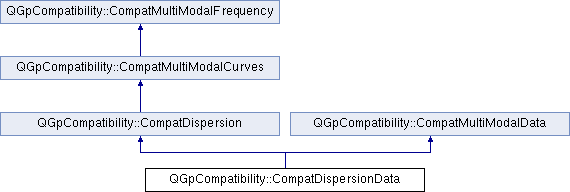
Public Member Functions | |
| double | closestModeMisfit (bool strictModeJumping, FILE *flog) |
| CompatDispersionData () | |
| default constructor | |
| CompatDispersionData (int modesCount, int omegasCount) | |
| Allocates an empty structure. | |
| CompatDispersionData (const CompatDispersionData *o, int modesCount) | |
| Allocates an empty structure based on an existing one with another number of modes. | |
| CompatDispersionData (const CompatMultiModalCurves *o) | |
| Set the values o as the measurements. | |
| void | convertStddev () |
| Export in a file readable by Herrmann SURF. | |
| ModalCurve | curve (int iMode) |
| QVector< double > * | groupSlowness (int iMode) |
| double | maxDataFrequency () |
| double | minDataFrequency () |
| double | misfit (int iMin, int iMax, FILE *flog) |
| double | misfit (FILE *flog) |
| Calculate the Root Mean Square for the current calculated dispersion curve. | |
| void | valuesToData () |
| void | valuesToData (CompatMultiModalCurves *o) |
default constructor
                        :
  CompatDispersion(), CompatMultiModalData() {}
| QGpCompatibility::CompatDispersionData::CompatDispersionData | ( | int | modesCount, |
| int | omegasCount | ||
| ) | [inline] |
Allocates an empty structure.
| QGpCompatibility::CompatDispersionData::CompatDispersionData | ( | const CompatDispersionData * | o, |
| int | modesCount | ||
| ) | [inline] |
Allocates an empty structure based on an existing one with another number of modes.
                                                                     :
      CompatDispersion(o, modesCount),
  CompatMultiModalData(o, modesCount,0) {}
| QGpCompatibility::CompatDispersionData::CompatDispersionData | ( | const CompatMultiModalCurves * | o | ) | [inline] |
Set the values o as the measurements.
                                                        :
      CompatDispersion(o),
  CompatMultiModalData(o) {}
| double QGpCompatibility::CompatDispersionData::closestModeMisfit | ( | bool | strictModeJumping, |
| FILE * | flog | ||
| ) |
Calculate the Root Mean Square for the current calculated dispersion curve using the mode that matches best the the data fundamental curve (taken as the effictive apparent velocity)
References QGpCompatibility::CompatMultiModalData::_measurements, QGpCompatibility::CompatMultiModalFrequency::_modesCount, QGpCompatibility::CompatMultiModalFrequency::_omegasCount, QGpCompatibility::CompatMultiModalData::_omegasCount, QGpCompatibility::CompatMultiModalData::_stddev, QGpCompatibility::CompatMultiModalCurves::_values, QGpCompatibility::CompatMultiModalData::measurements(), mode, QGpCoreTools::sqrt(), QGpCompatibility::CompatMultiModalData::stddev(), and TRACE.
{
  TRACE;
  //  RMS is the calculated with the closest mode
  double rms_val=0;
  int omegaCountReal=CompatMultiModalFrequency::_omegasCount;
  int omegaCountData=omegaCountReal;
  // Effective apparent velocity is always in mode 0 (fundamental)
  double * measurements=_measurements[0];
  double * stddev=_stddev[0];
  int maxMode=CompatMultiModalFrequency::_modesCount-1;
  for(int i=CompatMultiModalFrequency::_omegasCount-1;i>=0;i--) {
    if(measurements[i]!=0) {
      double diff,minDiff=1e99;
      int nextSampleMaxMode=maxMode;
      for(int mode=0;mode<=maxMode;mode++) {
        if(_values[mode][i]!=0) {
#ifdef SLOWNESS_MISFIT
          if(stddev[i]) diff=(measurements[i]-_values[mode][i]) /stddev[i];
          else diff=(measurements[i]-_values[mode][i]) /measurements[i];
#else
          if(stddev[i]) diff=(1/measurements[i]-1/_values[mode][i])*stddev[i];
          else diff=(1/measurements[i]-1/_values[mode][i])*measurements[i];
#endif
          if(diff<0) diff=-diff;
          if(diff<minDiff) {
            minDiff=diff;
            nextSampleMaxMode=mode;
          }
        }
      }
      if(strictModeJumping) maxMode=nextSampleMaxMode;
      if(minDiff!=1e99) rms_val+=minDiff*minDiff; else omegaCountReal--;
    }
    else {omegaCountData--;omegaCountReal--;}
  }
  if(omegaCountReal>0)
    rms_val=sqrt(rms_val/omegaCountReal)*(1+omegaCountData-omegaCountReal);
  else {
    fprintf(flog," *** ERROR *** : no common value between calculated and data, this should never happen!\n");
    rms_val=10000;
  }
  return rms_val;
}
Export in a file readable by Herrmann SURF.
the measurements are read from a file of the Herrmann disp.d format: 1st line : IUNIT (not used here) IFRPER (0 if period, 1 if frequency) Other lines: ILVRY (1=Love,2=Rayleigh) IPORG(unused) IMODE FRPER VAL DVAL(unused)
The way the stddev is stored has changed from the inverse of velocity stddev to the stddev of the slowness. new_stddev=old_stddev*slowness*slowness All reports with version 0 have the old format for stddev This routine is called be CompatInversionReport to change the stddev in case of version 0
References QGpCompatibility::CompatMultiModalData::_measurements, QGpCompatibility::CompatMultiModalData::_modesCount, QGpCompatibility::CompatMultiModalData::_omegasCount, QGpCompatibility::CompatMultiModalData::_stddev, QGpCompatibility::CompatMultiModalData::measurements(), mode, QGpCompatibility::CompatMultiModalData::stddev(), and TRACE.
Referenced by QGpCompatibility::CompatInversionReport::loadDispersionGoal().
{
  TRACE;
 for(int mode=0;mode<CompatMultiModalFrequency::_modesCount;mode++) {
  double * measurements=_measurements[mode];
  double * stddev=_stddev[mode];
  for(int i=0;i<CompatMultiModalFrequency::_omegasCount;i++)
     stddev[i]=measurements[i]*measurements[i]/stddev[i];
 }
}
| ModalCurve QGpCompatibility::CompatDispersionData::curve | ( | int | iMode | ) |
Reimplemented from QGpCompatibility::CompatMultiModalData.
References QGpCompatibility::CompatMultiModalFrequency::_omegas, QGpCompatibility::CompatMultiModalData::_omegasCount, and TRACE.
{
  TRACE;
  ModalCurve c=CompatMultiModalData::curve(iMode);
  int n=CompatMultiModalFrequency::_omegasCount;
    for(int i=0;i<n;i++) {
    c[i].setX(_omegas[i]);
  }
  return c;
}
| QVector< double > * QGpCompatibility::CompatDispersionData::groupSlowness | ( | int | iMode | ) |
References QGpCompatibility::CompatMultiModalData::_measurements, and QGpCompatibility::CompatMultiModalFrequency::_omegas.
{
  ASSERT(iMode<CompatMultiModalFrequency::_modesCount);
  QVector<double> * list=new QVector<double>;
  double * values=_measurements[iMode];
  int n=CompatMultiModalFrequency::_omegasCount-1;
  for(int i=1;i<n;i++) {
    double derslow=0.5*((values[i]-values[i-1])/(_omegas[i]-_omegas[i-1])+
                        (values[i+1]-values[i])/(_omegas[i+1]-_omegas[i]));
    derslow*=_omegas[i];
    list->push_back(values[i]+derslow);
  }
  return list;
}
References QGpCompatibility::CompatMultiModalData::_measurements, QGpCompatibility::CompatMultiModalData::_modesCount, QGpCompatibility::CompatMultiModalFrequency::_omegas, mode, TRACE, and twopi.
{
  TRACE;
  double maxFreq=0;
  for(int mode=0; mode<CompatMultiModalFrequency::_modesCount;mode++) {
    double * measurements=_measurements[mode];
    for(int i=CompatMultiModalFrequency::_omegasCount-1;i>=0;i--) {
      if(measurements[i]!=0) {
        if(_omegas[i]>maxFreq) maxFreq=_omegas[i];
        break;
      }
    }
  }
  return maxFreq/twopi;
}
References QGpCompatibility::CompatMultiModalData::_measurements, QGpCompatibility::CompatMultiModalData::_modesCount, QGpCompatibility::CompatMultiModalFrequency::_omegas, QGpCompatibility::CompatMultiModalData::_omegasCount, mode, TRACE, and twopi.
{
  TRACE;
  double minFreq=1e99;
  for(int mode=0; mode<CompatMultiModalFrequency::_modesCount;mode++) {
    double * measurements=_measurements[mode];
    for(int i=0;i<CompatMultiModalFrequency::_omegasCount;i++) {
      if(measurements[i]!=0) {
        if(_omegas[i]<minFreq) minFreq=_omegas[i];
        break;
      }
    }
  }
  return minFreq/twopi;
}
| double QGpCompatibility::CompatDispersionData::misfit | ( | int | iMin, |
| int | iMax, | ||
| FILE * | flog | ||
| ) |
Calculate the Root Mean Square for the current calculated dispersion curve between indexes iMin and iMax
References QGpCompatibility::CompatMultiModalData::_measurements, QGpCompatibility::CompatMultiModalFrequency::_modesCount, QGpCompatibility::CompatMultiModalData::_modesCount, QGpCompatibility::CompatMultiModalData::_stddev, QGpCompatibility::CompatMultiModalCurves::_values, QGpCompatibility::CompatMultiModalData::measurements(), mode, QGpCoreTools::sqrt(), QGpCompatibility::CompatMultiModalData::stddev(), and TRACE.
{
  TRACE;
  // Global RMS is the sum of the RMS of all modes
  double rms_val=0;
  int omegaCountReal=(iMax-iMin+1)*CompatMultiModalFrequency::_modesCount;
  int omegaCountData=omegaCountReal;
  for(int mode=0;mode<CompatMultiModalFrequency::_modesCount;mode++) {
    double * measurements=_measurements[mode];
    double * stddev=_stddev[mode];
    double * calculated=_values[mode];
    for(int i=iMin;i<=iMax;i++) {
      if(measurements[i]!=0) {
        if(calculated[i]!=0) {
          double diff;
#ifdef SLOWNESS_MISFIT
          if(stddev[i]) diff=(measurements[i]-calculated[i]) /stddev[i];
          else diff=(measurements[i]-calculated[i]) /measurements[i];
#else
          if(stddev[i]) diff=(1/measurements[i]-1/calculated[i])*stddev[i];
          else diff=(1/measurements[i]-1/calculated[i])*measurements[i];
#endif
          rms_val+=diff*diff;
        } else omegaCountReal--;
      } else {omegaCountData--;omegaCountReal--;}
    }
  }
  if(omegaCountReal>0)
    rms_val=sqrt(rms_val/omegaCountReal)*(1+omegaCountData-omegaCountReal);
  else if(omegaCountData==0) rms_val=0;
  else {
    fprintf(flog," *** ERROR *** : no common value between calculated and data, this should never happen!\n");
    rms_val=10000;
  }
  return rms_val;
}
| double QGpCompatibility::CompatDispersionData::misfit | ( | FILE * | flog | ) | [inline] |
Calculate the Root Mean Square for the current calculated dispersion curve.
References QGpCompatibility::CompatMultiModalFrequency::_omegasCount, and misfit().
  {
    return misfit(0,CompatMultiModalFrequency::_omegasCount-1,flog);
  }
| void QGpCompatibility::CompatDispersionData::valuesToData | ( | ) | [inline] |
References QGpCompatibility::CompatMultiModalData::valuesToData().
{CompatMultiModalData::valuesToData(this);}
| void QGpCompatibility::CompatDispersionData::valuesToData | ( | CompatMultiModalCurves * | o | ) | [inline] |
Reimplemented from QGpCompatibility::CompatMultiModalData.
References QGpCompatibility::CompatMultiModalData::valuesToData().

