
Brief description of class still missing. More...
#include <T0Correlation.h>
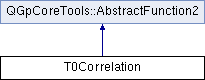
Public Member Functions | |
| void | setReceiverRange (int minRecIndex, int maxRecIndex) |
| void | setTimeLimits (const TimeRangeParameters &timeLimits) |
| T0Correlation (ShotRecord *refShot, ShotRecord *shot) | |
| virtual double | value (double x, double, int) const |
| virtual double | value (double x, double) const |
Protected Member Functions | |
| double | correlationInterpolate (double t0) |
Brief description of class still missing.
Full description of class still missing
| T0Correlation::T0Correlation | ( | ShotRecord * | refShot, |
| ShotRecord * | shot | ||
| ) |
Description of constructor still missing
References ShotRecord::nReceivers(), and TRACE.
{
  TRACE;
  _refShot=refShot;
  _shot=shot;
  _minRecIndex=0;
  _maxRecIndex=_refShot->nReceivers()-1;
}
| double T0Correlation::correlationInterpolate | ( | double | t0 | ) | [protected] |
| void T0Correlation::setReceiverRange | ( | int | minRecIndex, |
| int | maxRecIndex | ||
| ) |
References ShotRecord::nReceivers(), and TRACE.
Referenced by ToolNR::t0Apply().
{
  TRACE;
  int nReceivers=_refShot->nReceivers();
  _minRecIndex=minRecIndex;
  if(_minRecIndex<0) _minRecIndex=0;
  else if(_minRecIndex>=nReceivers) _minRecIndex=nReceivers-1;
  _maxRecIndex=maxRecIndex;
  if(_maxRecIndex<0) _maxRecIndex=0;
  else if(_maxRecIndex>=nReceivers) _maxRecIndex=nReceivers-1;
  if(_minRecIndex > _maxRecIndex) {
    int tmp=_minRecIndex;
    _minRecIndex=_maxRecIndex;
    _maxRecIndex=tmp;
  }
}
| void T0Correlation::setTimeLimits | ( | const TimeRangeParameters & | timeLimits | ) | [inline] |
Referenced by ToolNR::t0Apply().
{_timeLimits=timeLimits;}
| double T0Correlation::value | ( | double | x, |
| double | , | ||
| int | |||
| ) | const [virtual] |
Fast but imprecise shift: shift only multiples of deltaT
Reimplemented from QGpCoreTools::AbstractFunction2.
References GeopsyCore::TimeRangeParameters::absoluteRange(), GeopsyCore::SubSignalPool::at(), GeopsyCore::Signal::correlation(), GeopsyCore::Signal::maximumAmplitude(), GeopsyCore::Signal::setT0(), GeopsyCore::Signal::t0(), and TRACE.
{
  TRACE;
  double globalCorr=0.0;
  for(int i=_minRecIndex; i<=_maxRecIndex; i++) {
    Signal * shotSig=_shot->at(i);
    const Signal * refShotSig=_refShot->at(i);
    double saveT0=shotSig->t0();
    shotSig->setT0(x);
    TimeRange tw=_timeLimits.absoluteRange(shotSig);
    double norm=1.0/refShotSig->maximumAmplitude();
    globalCorr += shotSig->correlation(refShotSig, tw)*norm*norm;
    shotSig->setT0(saveT0);
  }
  return globalCorr;
}
| double T0Correlation::value | ( | double | x, |
| double | |||
| ) | const [virtual] |
Slow but precise shift: shift by arbitrary time
Implements QGpCoreTools::AbstractFunction2.
References GeopsyCore::TimeRangeParameters::absoluteRange(), GeopsyCore::SubSignalPool::at(), GeopsyCore::DoubleSignal::copySamplesFrom(), GeopsyCore::DoubleSignal::correlation(), GeopsyCore::TimeRange::lengthSeconds(), GeopsyCore::Signal::maximumAmplitude(), GeopsyCore::DoubleSignal::shift(), GeopsyCore::TimeRange::start(), GeopsyCore::Signal::t0(), and TRACE.
{
  TRACE;
  double globalCorr=0.0;
  for(int i=_minRecIndex; i<=_maxRecIndex; i++) {
    const Signal * refShotSig=_refShot->at(i);
    const Signal * shotSig=_shot->at(i);
    DoubleSignal * shiftShotSig=new DoubleSignal(*shotSig);
    shiftShotSig->copySamplesFrom(shotSig);
    shiftShotSig->shift(shotSig->t0() - x);
    TimeRange tw=_timeLimits.absoluteRange(shotSig);
    double norm=1.0/refShotSig->maximumAmplitude();
    globalCorr += shiftShotSig->correlation(refShotSig, tw.start()-refShotSig->t0(),
                                                         tw.start()-shotSig->t0(),
                                                         tw.lengthSeconds())*norm*norm;
    delete shiftShotSig;
  }
  return globalCorr;
}


